What you need to know as two foreigners getting married in Cape Town

If you’re reading this blog, you’re likely planning on getting married in Cape Town – yes please! I probably don’t need to convince you about the city’s beauty — you’ve already chosen it as the place for your elopement or wedding …

But it’s fun (as a Capetonian) to revel in just how incredible this city and country truly are. So, here goes. Did I mention our exquisite beaches? What about our extraordinary Cape Floral Kingdom? Or the Big Five just a short drive away. And then there’s the warmth of the people you’ll meet here. Add to that the fine dining scene, award-winning wine estates, whale watching, surfing in Muizenberg, hiking up Lion’s Head, and the breathtaking views from every corner of the city — and it’s no wonder couples from all over the world choose to get married in Cape Town.

Because of how much the tip of Africa has to offer, many foreigners getting married in Cape Town double-up – planning a wedding or elopement here and chasing it up with a honeymoon. And why the hell not?! If this is something you’re considering, you may want to have a look at a few tours on offer. Secret Cape Town also provides a wealth of information on what to do when in the city.

Whether you’re planning something grand or simple, the process is surprisingly simple for two foreigners getting married in Cape Town. You do, however, need an experienced marriage officer guiding you through the steps.

Elopements allow you to focus on what’s really important – your love; your intention to do life together.

How to Get Married in Cape Town as Two Foreigners

Fortunately, it’s actually quite easy to marry two foreigners in South Africa. I mention Cape Town specifically because that’s where I’m based, but the legal requirements are the same across the country. Note: If one of you is a foreigner and the other a South African citizen, you need to fulfill different requirements. Read through this blog for more information.

Let me start with a question I get asked by foreigners fairly frequently. How long do we need to be in the country in order to get married? My answer: An afternoon. Although I wouldn’t recommend that because as we already discussed (in some length), Cape Town has SO many sights and experiences to delve into – coming in and out of the city would be a pity. I think I get asked this question frequently because there’s a lot of misinformation online about the duration you have to be in the country for and also having to notify certain parties of your intention to get married. Neither is true.

There are so many little-known spots in Cape Town that serve as perfect locations for wild elopements

Let’s start with the Letter of Non-Impediment

When a foreigner gets married in South Africa, they need a Letter of Non-Impediment. This is a document from your government confirming that you are legally free to marry. It might be issued by your embassy, consulate, or your country’s equivalent of Home Affairs.

The details vary from country to country:

Germany: Issues a classic Letter of Non-Impediment. If you’re both German citizens, you’ll receive just one letter, which lists both partners. The document is in German, but contains an English translation within it.

United Kingdom: Does not issue a Letter of Non-Impediment. Instead, UK citizens can sign an affidavit confirming there’s no legal barrier to their marriage. In South Africa, affidavits can be done for free at a police station — simply bring a pen, fill in the form, and write a short declaration.

United States: Also uses an affidavit, which can be done at the US Consulate in Cape Town.

Because I’ve married couples from many countries, I can often tell you exactly what your country issues and provide you with some guidance in this regard. Importantly, your letter of non-impediment is only valid for 6 months from the date of issue so you don’t want to apply for it too early (I know, I know you’re excited!). You also don’t want to leave it too late as some countries have quite a rigmarole that you have to go through in order to obtain it. No one wants that stress in the lead up to their destination wedding!

The wonderful thing about an elopement is you get to do things on your own terms – no rushing, no obligations – just the two of you; being the two of you

Document Checklist Foreigners Get Married in Cape Town

Once the Letter of Non-Impediment (or affidavit) is sorted, everything else is straightforward:

Passports: Copies of each, linked to the issuing country of your non-impediment letter or affidavit.

Entry Stamps: Sent to me via WhatsApp after arrival.

Divorce Decrees: If either of you has been married before.

Translations: Any non-English documents must be translated by a certified translator (unless the translation is already included, as with the German example).

A letter from your notary confirming you have signed an ante-nuptial contract (if you have opted to do so – some info below).

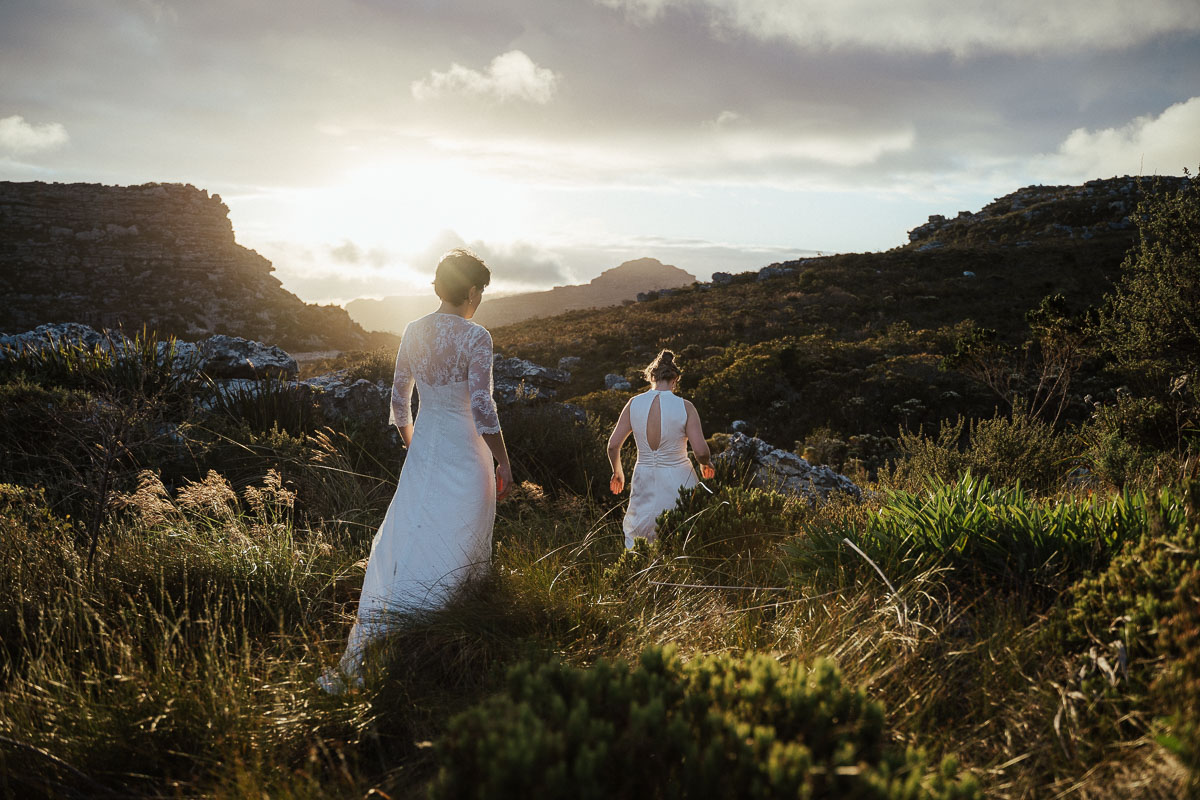
There are secret gems scattered along the coast that make for breathtaking backdrops for your elopement

Ante-nuptial Contract (Prenup)

In South Africa, couples can sign an ante-nuptial contract (often called a “pre-nup”), which decides how assets and liabilities are handled in the marriage. The default here is “in community of property” — meaning all assets and debts are shared. This can be risky, especially if one of you owns a business.

Many South Africans choose to sign an ante-nuptial contract to set their own rules. It must be done before the marriage, through a notary. If you decide to do this, your notary will give me a letter confirming the contract is signed — I don’t need to see the contract itself. Post-nuptial contracts are possible but costly and complicated, so I strongly recommend doing it beforehand if you want one.

Many foreign couples do not consider it necessary to sign an ante-nuptial as the laws in their countries govern how assets/liabilities will be divided in the event of separation and so there are safeguards built in – in other words, the default positions in other countries are often protective and fair, rather than old-fashioned and limiting (as is the case in South Africa). Still, if you’re unsure whether you need such a contract or not, I advise consulting with an expert so that you make an informed decision.

If you do decide to sign such a contract – I don’t need to see the actual contract but, rather, confirmation (in the form of a letter from your notary) that such a contract was entered into.

You should feel like your most authentic self on the day you get married

Registering Your Marriage in Your Home Country

If you live outside South Africa, you’ll probably want to register your marriage at home. Most countries require an unabridged marriage certificate, and many (especially in Europe) also require an apostille stamp for extra authentication.

UK & USA: Usually only need the unabridged certificate.

Most European countries: Require both the unabridged certificate and an apostille.

The apostille stamp is valid for six months, so plan your registration accordingly.

I offer a service of applying, collecting and couriering your unabridged marriage certificates to you. Another question I get asked often: Do we need to be in the country to apply for or collect our certificates? No. You can get married and hop straight onto the next flight out. (Don’t – go see the Garden Route; take a cobra on a drive along one of the most spectacular roads in the world; explore the Cape Winelands.)

Elopements allow you to focus on what’s really important – your love; your intention to do life together.

Types of Weddings in Cape Town for Foreign Couples

Foreign couples come with all kinds of visions for their day. Here are the three most common:

1. The Classic Wedding

Big celebrations at wine estates, boutique hotels, or luxury venues with your nearest and dearest flying in. Here’s a look at some well-known Cape Town venues. Whatever venue you decide on, I will be there to handle the ceremony and legalities while your wedding planner coordinates the rest.

2. The Elopement

Just the two of you, or a few close friends and family, in a stunning outdoor location — beach, mountain, or nature reserve. We create a ceremony that’s personal to you and your story. The magic of an elopement is that you get to focus on each other and the commitment you’re making. And you get to have fun! Pop a bottle of bubbly, drink straight from the bottle. Don’t rush – there’s plenty of time without any of the obligation to say hi to Aunt Jude who you haven’t seen since you were 7. Exchange personal vows (or don’t).

Remember that it’s your day and your elopement and you get to decide how it unfolds (and also where it unfolds).

How’s this for a magic spot to exchange vows with the love of your life?

3. The Legal Signing with a Special Touch

For couples focused mainly on the paperwork but wanting a beautiful setting, I offer simple ceremonies at my home (close to the CBD) in Vredehoek. It’s intimate and efficient but still feels special.

Since South Africa legalised same-sex marriage in 2006 (one of the first countries in the world to do so), Cape Town has become a natural choice for LGBTQIA+ couples wanted to celebrate the beginning of their marriage

Deciding Where to Get Married

Cape Town offers an endless choice of locations for your wedding day:

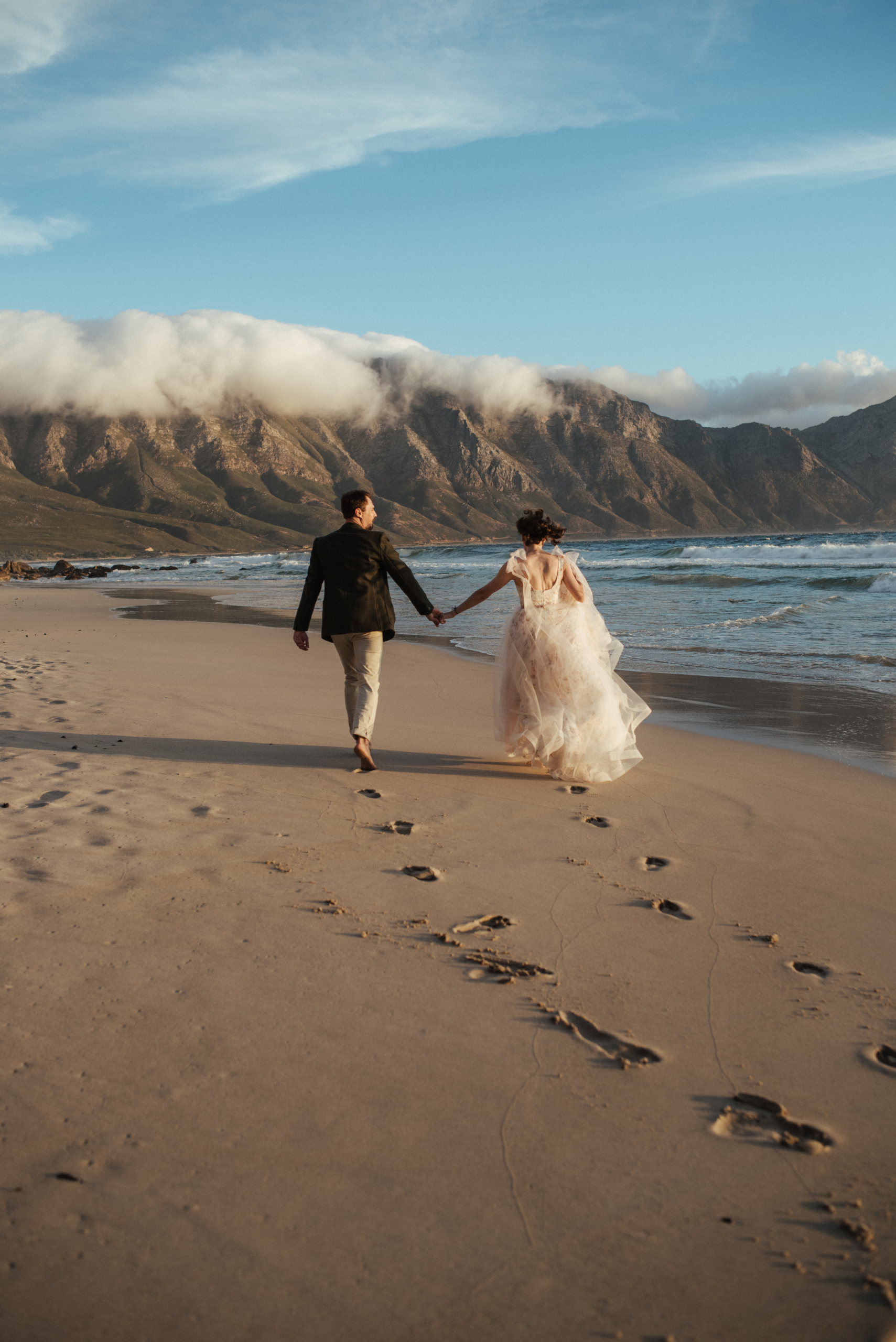
By the sea: Quiet beaches at sunset for barefoot vows.

In the mountains: Sweeping views of Table Mountain, Lion’s Head and the 12 Apostles.

In nature: Botanical gardens or wild reserves.

Some couples double up their accommodation and ceremony venue, booking an Airbnb or guesthouse with beautiful views with the aim of holding the ceremony there. This not only gives you a stunning backdrop but also a built-in backup in case of bad weather.

Fancy having the 12 Apostles in the background as you say your “I do”s? Wonderful – let’s make it happen.

Final Thoughts on Getting Married in Cape Town

Whether you’re planning a big do at an exquisite venue, an adventurous mountain elopement, or a simple signing with ocean views, getting married in Cape Town can be as straightforward or as lavish as you want it to be.

With the right preparation — and someone to guide you through the process — you can focus on what matters most: celebrating your love in one of the most beautiful cities in the world.

On a personal note, I believe that a ceremony sets the tone of the whole wedding celebration. It’s important to connect with your celebrant as they usher you into one of the most meaningful decisions of your life. The right fit is important, even if you plan only to do paperwork. To get a sense of who I am and what I value, you can find out a little here. And then if you do think I’m the right person, contact me on marriageofficerlara@gmail.com

Scarborough, near Cape Point, has become an increasingly popular spot for couples to elope

Finding LGBTQIA+ friendly officiants and celebrants

What are some of the challenges couples face when looking to celebrate their same sex marriage in Cape Town? Unfortunately, most worry about finding an inclusive, LGBTQIA+ friendly officiant or celebrant. Even in South Africa – a country that legalised same-sex marriage way back in 2006 – this is still a realistic concern.

Am I comfortable officiating same-sex marriage in Cape Town? I still receive enquiries asking this and it my heart ache that anyone has jump this hurdle.

I’m writing this blog to try “get it out there” that as a marriage officer, I welcome LGBTQIA+ couples. More than that, I celebrate them! (Also, I’m probably not supposed to say this, but queer couples are my favourite. Actually, you know what, I can say that because I’m part of the community. I understand some of the sensitivities and warranted anxieties that come with looking for celebrants, photographers, florists, make-up artists…  I hate that many couples experience rejection and prejudice at a time that should be nothing but exciting.

Celebrate the beginning of your same-sex marriage in Cape Town

Foreign couples often travel great distances to celebrate the start of their same-sex marriage in Cape Town

How South Africa came to recognise same-sex marriage

In South Africa, we have two pieces of legislation under which couples can marry: The Marriage Act and The Civil Union Act. The Marriage Act preceded The Civil Union Act. The Civil Union Act came into being because of a Constitutional Court ruling declaring the fact that same-sex couples could not enjoy the privileges of marriage discriminatory. The Court gave the Legislature two options. First, the Legislature could change the Marriage Act to include same-sex marriage. This would have been as simple as amending words like wife/husband to spouse. The second option: the Legislature could introduce a new piece of law governing same sex marriage. The Legislature went for the second option (wrongly in my opinion).

Welcoming the Civil Union Act

In 2006, South Africa ushered in the The Civil Union Act catering for both heterosexual couples and same-sex couples. The Civil Union Act is thus more inclusive . That is, all couples can get married under this piece of legislation while The Marriage Act is reserved for heterosexual couples. Marriages under the different pieces of legislation have the same rights and are thus equal. They do go by slightly different names. Under the Marriage Act you have a civil marriage whereas the Civil Union Act equivalent is a civil union marriage. Importantly, both are marriages.

(The Civil Union Act also has the option of a Civil Partnership but this is not commonly requested. Home Affairs has instructed me not to perform such unions. If you really want to enter a Civil Partnership, you’ll need to liaise directly with Home Affairs.)

Celebrating same-sex marriage in Cape Town

The true joy of celebrating the start of your same-sex marriage in Cape Town? The unbelievable mountain views.

Can all marriage officers in South Africa perform civil union marriages?

No. Some marriage officers are only registered under the Marriage Act. Such officiants can only perform civil marriages which means they only ever marry heterosexual couples. When these marriage officers get requests from same-sex couples, they have to direct them elsewhere. Now, some of these marriage officers probably wish they were registered under the Civil Union Act as well as the Marriage Act. Although, if they really wanted to be, then they could simply take a test and VIOLA so you have to ask…. how much do they really want it?

There are quite a lot of marriage officers that ‘hide’ their prejudice under the excuse that they’re only registered under the earlier act – The Marriage Act. And then there are of course marriage officers that are outright with their discrimination and do not believe in same-sex marriage. So, if you’re looking for a safe harbour to determine if the marriage officer is the “one” for you – ask if they’re registered under The Civil Union Act?

Heterosexual couples can show solidarity with the LGBTQIA+ community by specifically requesting to be married under The Civil Union Act. Every time I get an enquiry from a heterosexual couple asking for a civil union marriage, it warms my heart.

Celebrating same-sex marriage in Cape Town

Another couple celebrates the beginning of their same-sex marriage in Cape Town, frolicking on Langebaan beach

Foreigners getting married in Cape Town looking to register their civil union marriages elsewhere in the world

So many LGBTQIA+ couples come to South Africa to get married and there a so many reasons they do so. Firstly, our beaches. Secondly, our mountains. Thirdly, our wildlife. And, of course, because of our progressive laws. Sadly, many couples have to travel outside of their home country to get married because such unions are not recognised (in some countries, atrociously, same-sex marriage is still criminalised).

For such couples and other foreign couples simply wanting to elope, one of their major concerns is having their marriage recognised in their home country or perhaps a country that they intend moving to once they’re married. Where a couple consists of two foreigners, the only option for a formal marriage certificate is the unabridged marriage certificate.

Acquiring an unabridged marriage certificate

I’m not going to lie, it can be an administrative headache but it doesn’t need to be. It’s best to use a service to get your unabridged marriage certificate. You do not need to be in the country when the certificate is applied for nor do you need to collect it yourself. The certificate will be couriered to you.

Feel free to do some research and find a company that you feel comfortable with handling this admin. I do offer such a service myself. I charge R4000 for the unabridged marriage certificate and the international courier fee is R950. In addition to the unabridged marriage certificate, some countries require an additional authentication before they will accept a certificate as valid. This usually comes in the form of an apostille stamp. I will be able to tell you if you do need such an apostille when we discuss what country you will be living in once married.

Celebrating same-sex marriage in Cape Town

Don’t let the start of your forever be tainted by any worries about being accepted or safe or seen

A final note for those that have read this far

You and your love deserve to be celebrated. Cape Town is the most wonderful city and I’m so excited for you that you’ve chosen to start your marriage with an epic adventure. I’d love to be a part of that celebration, be it in a simple ceremony/signing at my home or at a lavish venue with 100 of your closest people. Apparently I need to write same-sex marriage in Cape Town one more time in this blog in order to better the chances of you finding me and I really want you to find me, so let me add one for luck: Same-sex marriage in Cape Town.